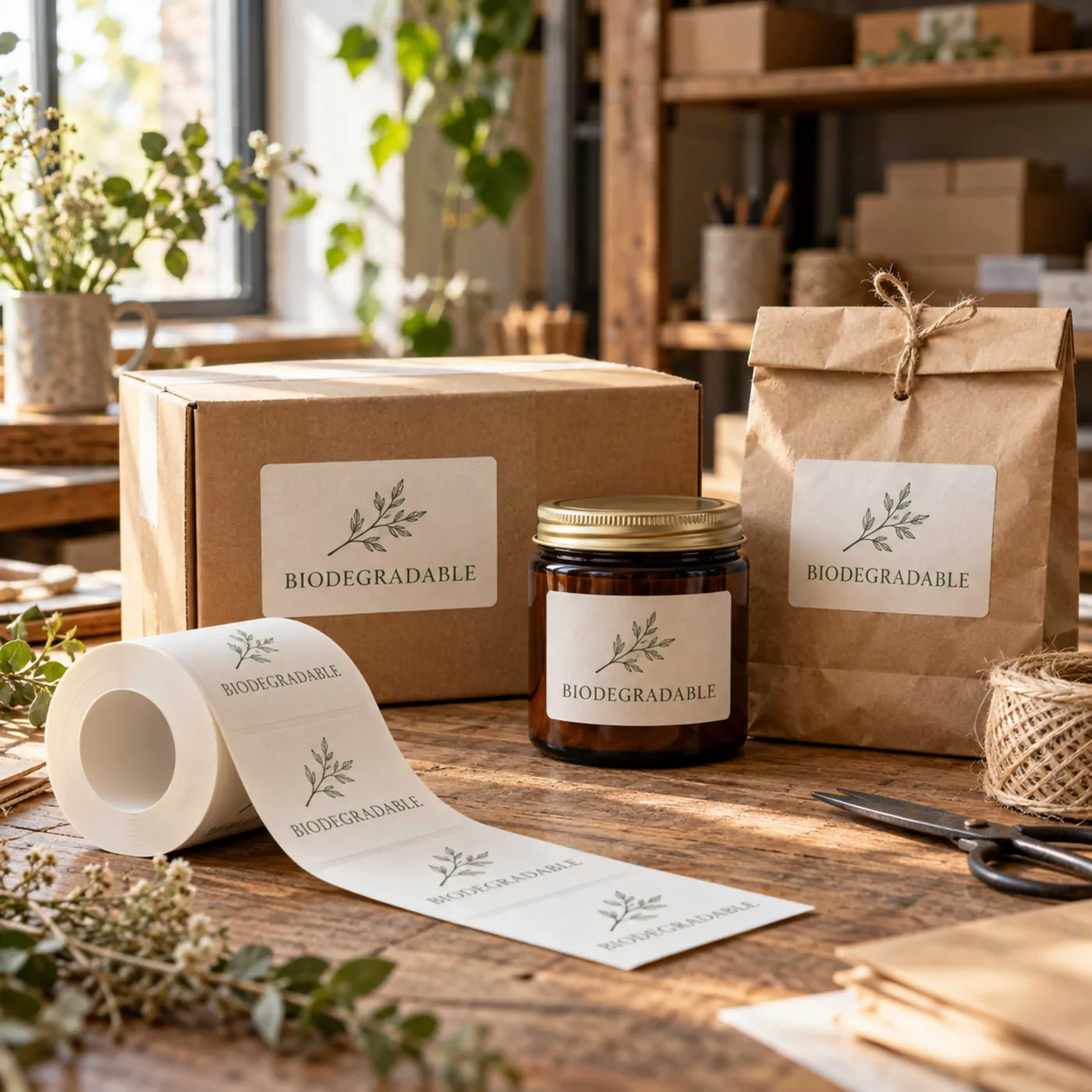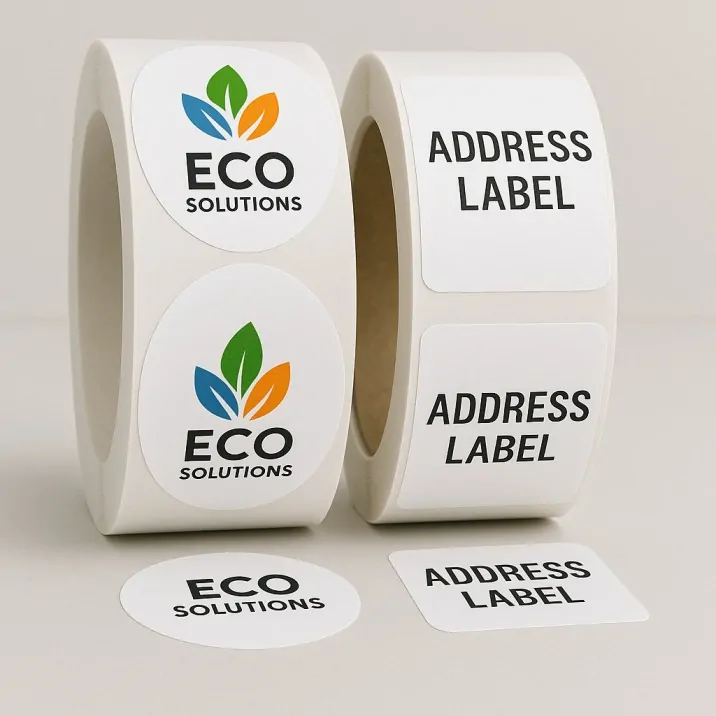

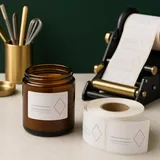

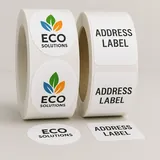
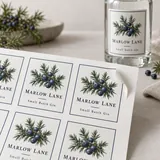









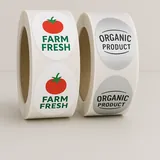
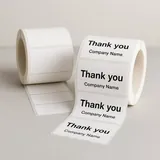
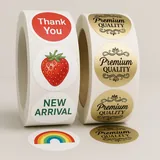

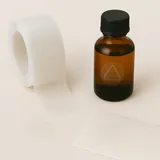

Choosing labels with an environmental aim is a purchasing decision, not just a design choice. Start with the packaging system you already use and ask what change you want the label to support.
Define the improvement you want
You might want to reduce waste in a short print run, use a face material with recycled content or make the label compatible with the packaging’s disposal route. Those are different goals. Specify the one you need rather than asking for a generally “green” sticker.
Match the label to the packaging
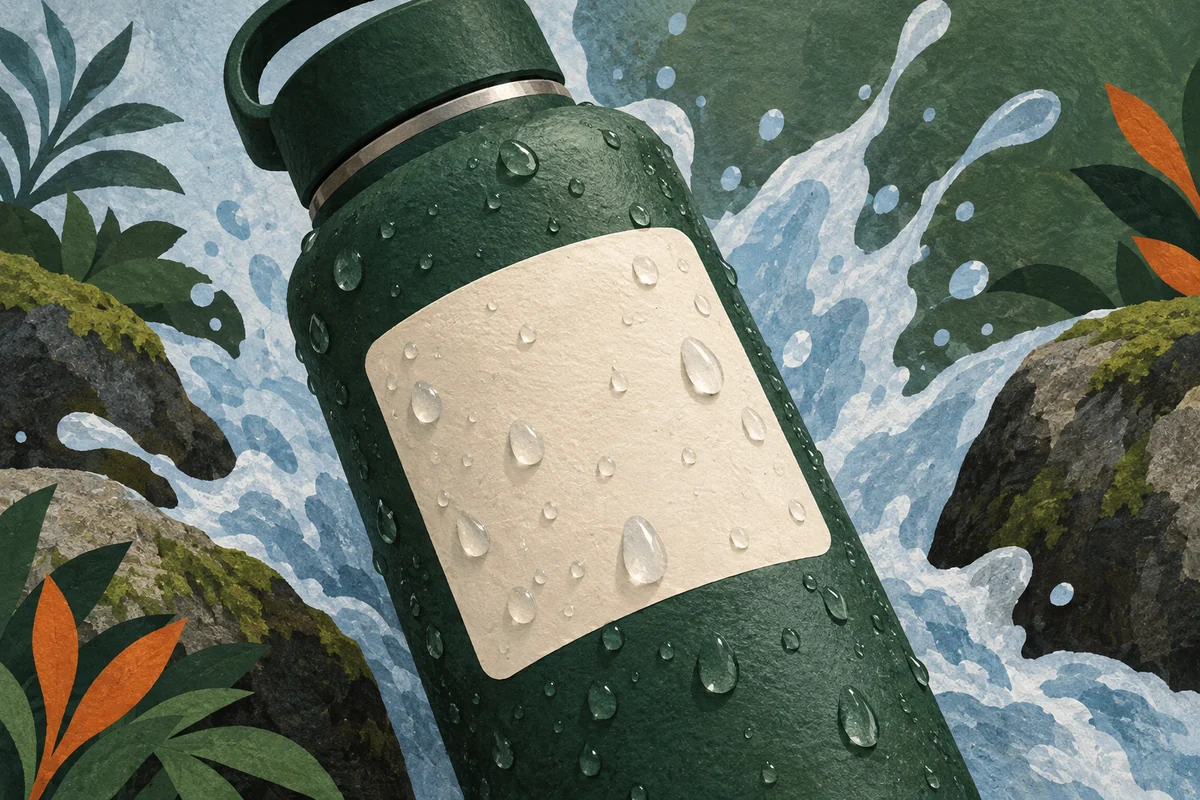
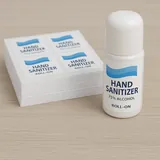
Identify the container material, application surface and likely conditions. A label that falls off during use or forces you to replace the packaging may create avoidable waste. Test the proposed construction on the real item.
Ask the supplier useful questions
- What are the face material, adhesive and liner made from?
- Which parts are covered by the recycled-content claim?
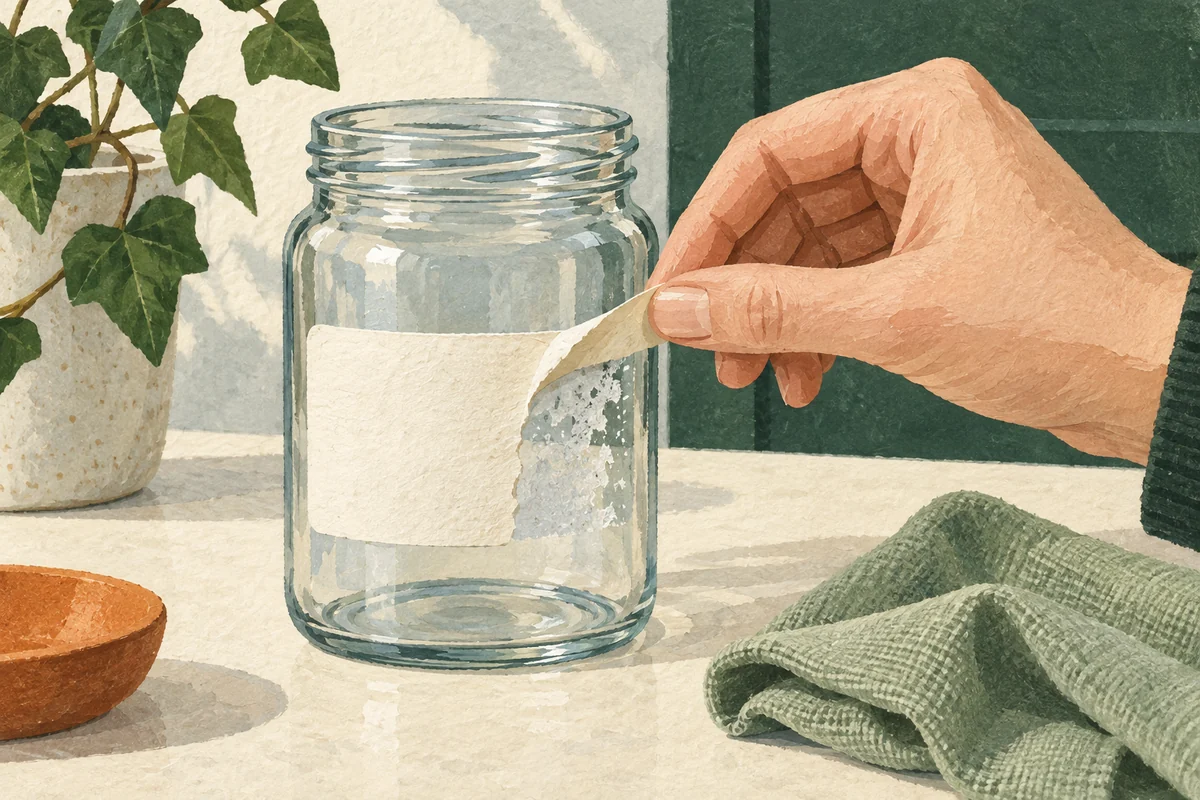
- Does the label suit the intended recycling or composting route?
- What evidence supports any certification claim?
- What conditions and limitations should customers be told about?
Order the right amount
Forecast how much packaging you will use before a design, recipe or contact detail changes. Keeping artwork versions organised and checking proofs can help prevent an unusable batch.
Describe the choice clearly
The CMA’s Green Claims Code calls for clear, accurate and supported environmental claims. State the specific improvement and its limits rather than promising that a product has no environmental impact.
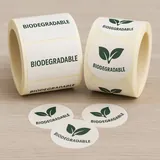
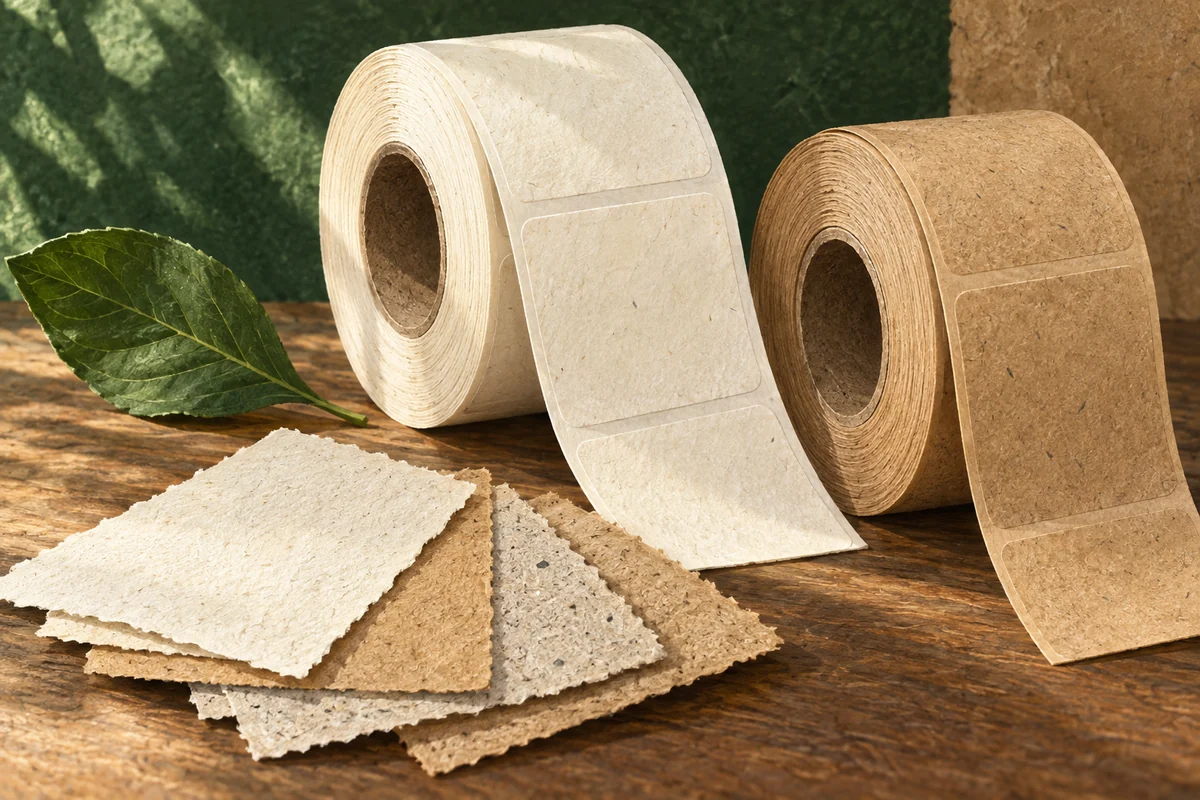
Compare the available biodegradable labels, then ask for the exact specification. For the differences between the terms, read recycled, recyclable, biodegradable and compostable labels.