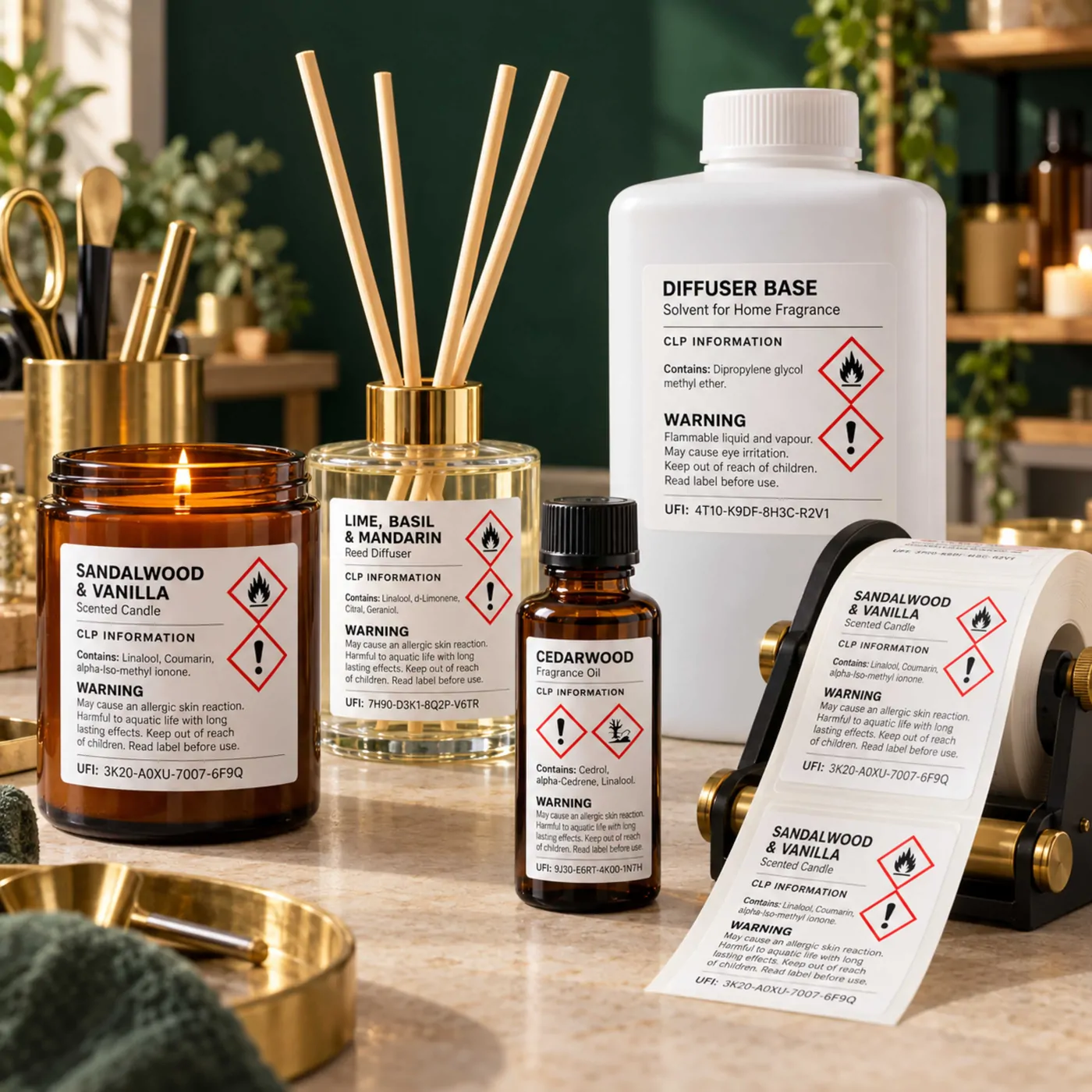
















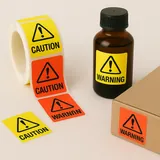


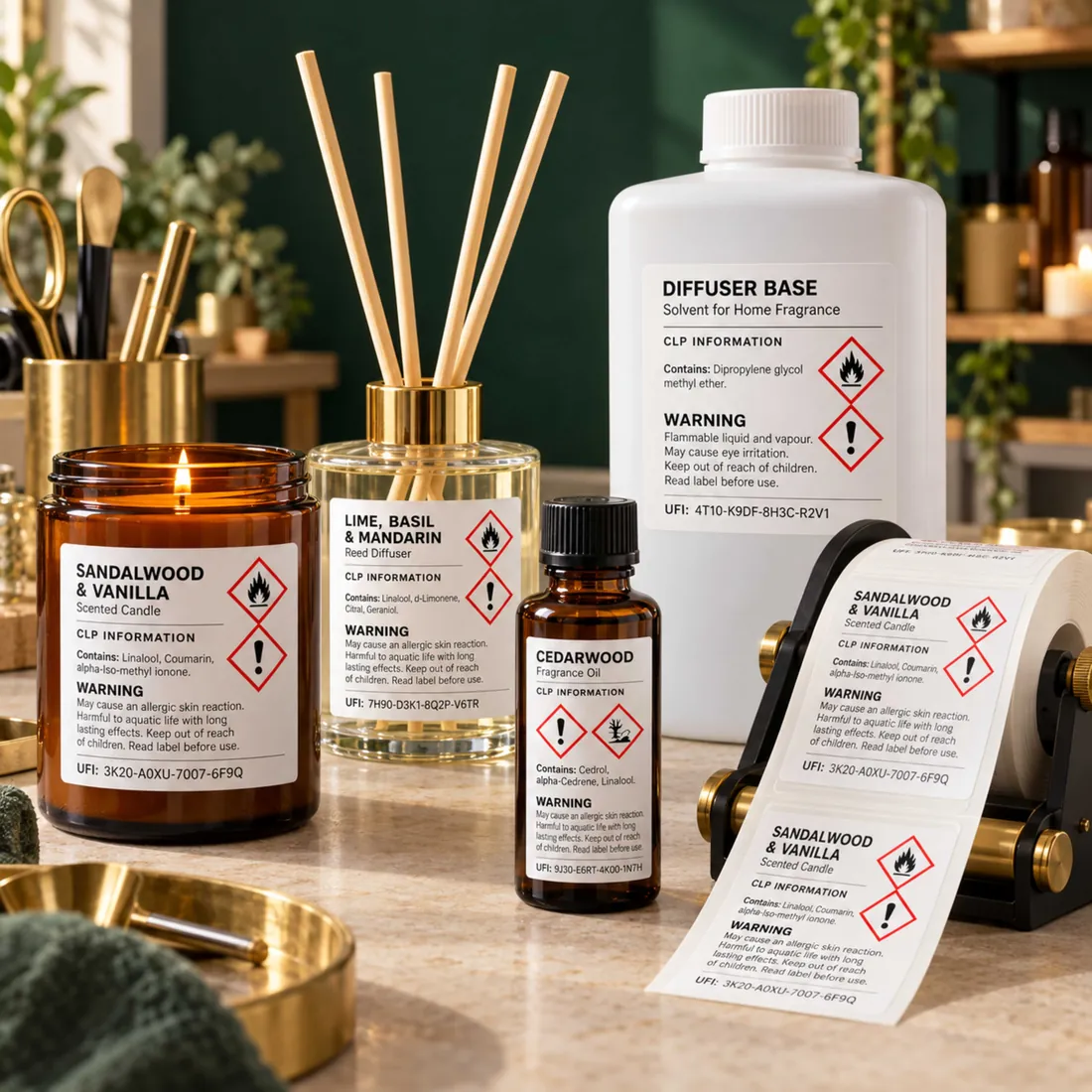
The red-bordered diamond hazard pictograms are familiar on chemical products, but a compliant label needs more than a symbol. Classification determines which information applies to the substance or mixture you supply.
CLP guidance in Great Britain and Northern Ireland
HSE explains the GB CLP rules for Great Britain. Northern Ireland has a different regulatory route. Check the rules for the market where the product will be supplied before finalising artwork.
Build the label from the product classification
Use the current classification and safety data supplied for the exact product. Depending on that classification, a label may need identifiers, supplier details, pictograms, a signal word, and hazard and precautionary statements. A symbol copied from another product is not a reliable template.
Check the complete artwork
- Confirm the product and supplier details.
- Use the correct pictograms and wording for the classification.
- Check size, contrast and legibility on the real container.
- Confirm whether extra packaging or tactile warning requirements apply.
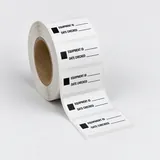
Printing CLP labels reproduces the artwork you provide; it does not establish the chemical classification. Get the compliance information settled before ordering. Tactile warning labels are a separate packaging consideration where required.
Sources and further reading
HSE: chemical labelling and packaging
Read the next guide
For business labelling, continue with The Importance of Correct Labelling.